

E-Cigarette Basics: Do You Really Understand Coils, E-Liquid, and Batteries?

E-cigarette products may contain nicotine, which is addictive and may pose potential health risks. This article is intended for basic educational purposes only and is not suitable for minors. Please follow the laws and regulations regarding e-cigarette sales and usage in your country or region.
For many beginners, the first things they notice about an e-cigarette are usually the puff count, vapor size, or flavor intensity. But in reality, a good vaping experience mainly depends on three core components: the coil, the e-liquid, and the battery.
Think of them like the engine, fuel, and fuel tank of a car. Even if the specifications look impressive, poor balance between these parts can still lead to a disappointing experience.
Let’s break down the basics in a simple and beginner-friendly way.
The Coil: The Key to Stable Flavor
If an e-cigarette were a small steam machine, the coil would be the heating system.
Its job is simple: absorb e-liquid and heat it into vapor using electricity from the battery.
Common Types of Coils
The two most common coil materials are:
- Cotton coils
- Ceramic coils
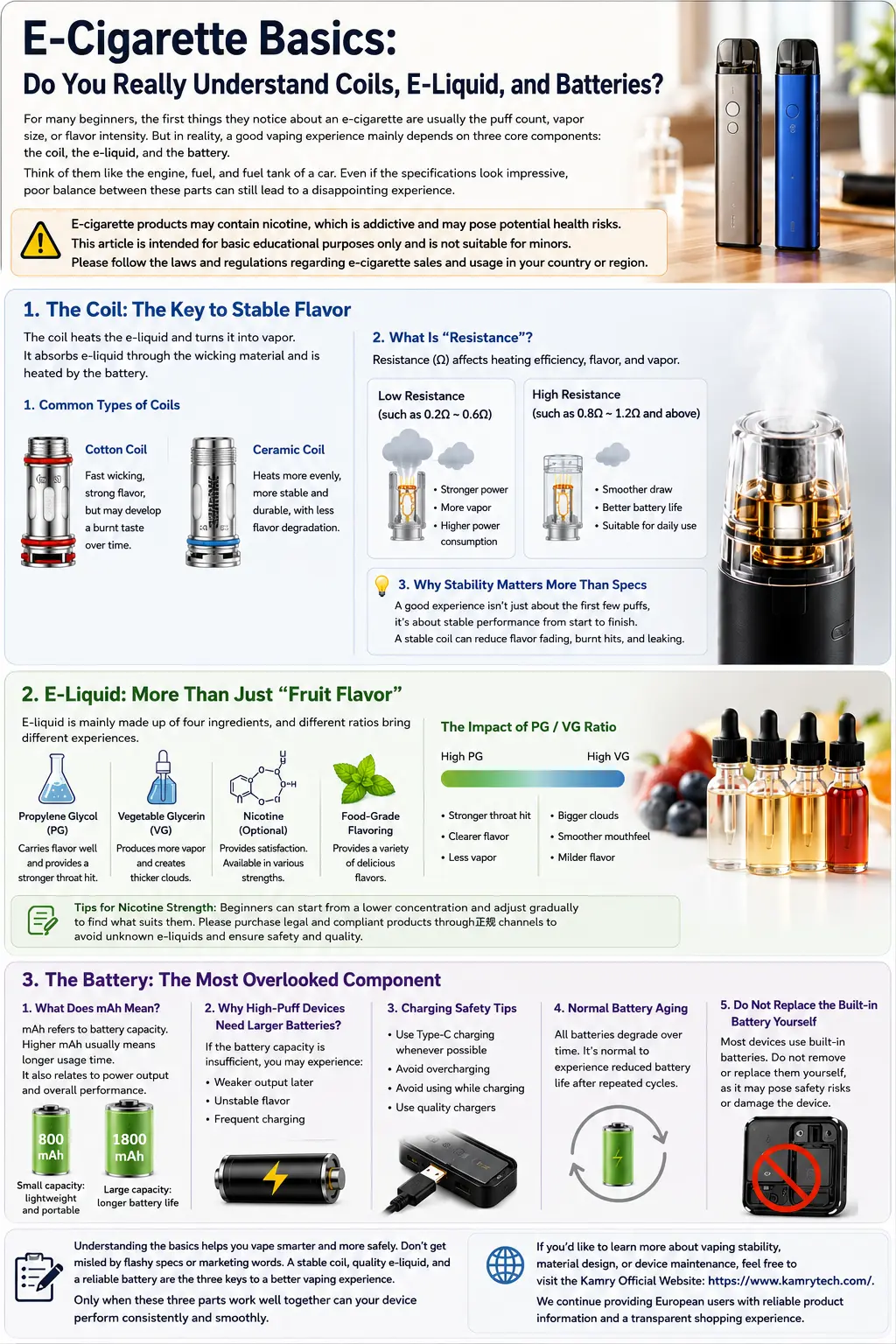
Cotton coils usually deliver stronger flavor and absorb liquid quickly, but after extended use, they may develop a burnt taste more easily.
Ceramic coils are more like “slow cooking.” They tend to heat more evenly and often provide better consistency, especially during the later stages of use.
What Does Resistance Mean?
You may have seen numbers like “0.6Ω” or “1.0Ω.” In simple terms:
- Low resistance = stronger power and larger vapor production
- High resistance = smoother draw and better battery efficiency
It’s similar to switching between “sport mode” and “eco mode” in a car.
Low-resistance devices are often preferred by users who enjoy bigger clouds, while high-resistance setups are more suitable for lighter daily use.
Why Stability Matters More Than Specifications
Some devices focus heavily on high puff counts or powerful output, but long-term users usually care more about:
- Whether the flavor stays consistent
- Whether the coil burns too quickly
- Whether every puff feels smooth and stable
It’s like drinking a cup of coffee — the challenge is not making the first sip taste good, but keeping the last sip enjoyable too.
A stable vaping system is often more important than flashy specifications.
E-Liquid: More Than Just Flavor
Many beginners think e-liquid is simply flavored liquid, but it actually contains several basic ingredients:
- Propylene Glycol (PG)
- Vegetable Glycerin (VG)
- Nicotine (in some products)
- Food-grade flavoring
PG vs VG: What’s the Difference?
These two ingredients strongly affect the vaping experience.
High VG: Bigger Vapor Clouds
VG is thicker and produces denser vapor.
If a device creates large, smooth clouds, it usually contains a higher VG ratio.
However, high-VG liquids also require good coil absorption performance.
High PG: Stronger Throat Hit
PG carries flavor more efficiently and provides a stronger throat sensation.
Many former traditional smokers find high-PG liquids easier to adapt to.
But for some users, too much PG may feel slightly harsh.
Choosing the Right Nicotine Strength
This is something many beginners overlook.
Higher nicotine strength is not always better. The right level depends on personal habits and preferences.
If the nicotine level is too high, users may experience dizziness or discomfort. Too low, and it may not feel satisfying enough.
It’s also important to buy products through legal and reliable channels to avoid low-quality or unknown e-liquids.
The Battery: The Most Overlooked Component
The battery affects much more than just usage time.
What Does mAh Mean?
mAh refers to battery capacity.
In general:
- Smaller batteries are lighter and more portable
- Larger batteries usually provide longer usage time
But actual battery life also depends on device power and vaping frequency.
Why High-Puff Devices Need Larger Batteries
Some devices advertise extremely high puff counts, but without enough battery capacity, users may experience:
- Weak performance later in the battery cycle
- Inconsistent flavor output
- Frequent charging
It’s similar to putting a tiny fuel tank into a high-performance car.
Charging Safety Matters
Many modern devices now use Type-C charging, which is generally more convenient and reliable.
For safer daily use:
- Avoid overcharging for long periods
- Avoid heavy use while charging
- Use reliable charging adapters and cables
Batteries naturally wear down over time, so reduced battery life after repeated charging cycles is normal.
Do Not Replace Built-In Batteries Yourself
Many modern vaping devices use built-in lithium batteries.
Opening or modifying them yourself may create safety risks and can damage the internal structure of the device.
If the battery becomes unstable or significantly weaker, it’s safer to replace the device through proper channels rather than attempting DIY repairs.
Final Thoughts
For beginners, understanding the basics is far more valuable than focusing only on marketing terms or impressive numbers.
The coil affects flavor consistency, the e-liquid shapes the overall experience, and the battery determines both safety and endurance. When these three parts work well together, the vaping experience becomes smoother and more reliable.
If you’d like to learn more about vaping stability, material design, or device maintenance, feel free to visit the Kamry Official Website. We continue providing European users with reliable product information and a transparent shopping experience.