

5 Nicotine Safety Rules for Vapers: How to Store E-Liquid & Protect Your Family

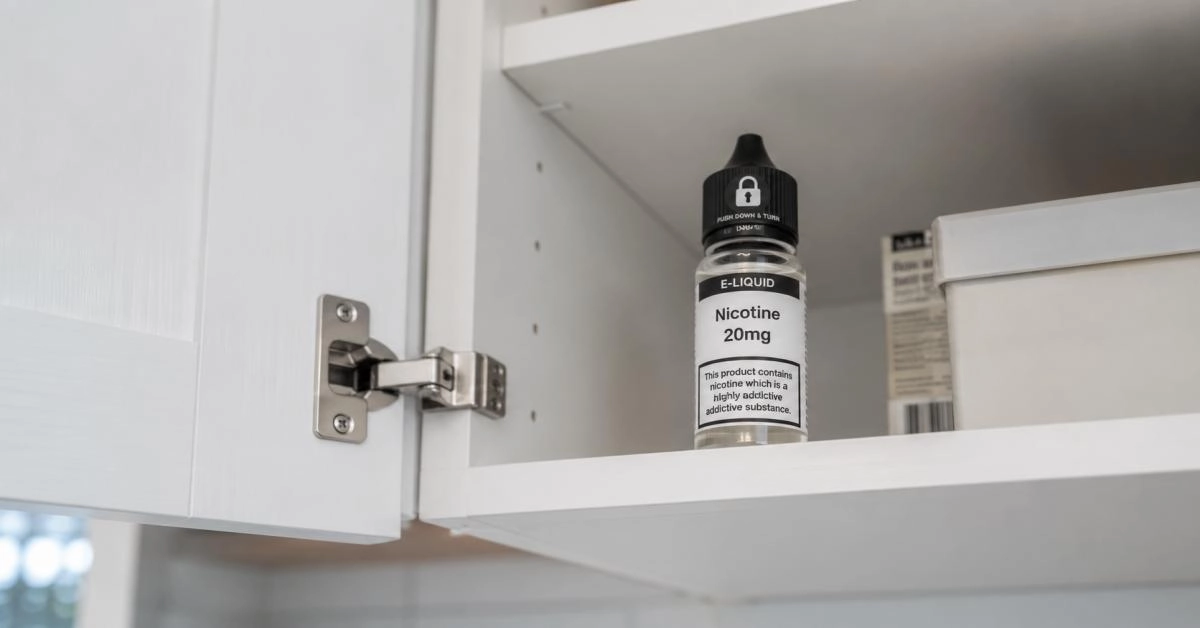
If you vape, you probably have bottles of e-liquid at home. But did you know that a single 10ml bottle of 20mg/ml nicotine liquid contains 200mg of nicotine – enough to cause severe poisoning in a child or pet? Nicotine safety for vapers is not optional; it’s a responsibility. This guide presents five simple rules to store e-liquid safely, prevent accidental exposure, and protect everyone in your household.
Why Nicotine Safety Matters for Every Vaper
Nicotine is a potent neurotoxin. While the EU’s TPD limits nicotine to 20mg/ml (2%), concentrated e-liquid can still be dangerous if swallowed or absorbed through skin. Symptoms of nicotine poisoning include:
- Nausea, vomiting, and diarrhea
- Increased heart rate and blood pressure
- Dizziness, headache, and confusion
- Seizures or respiratory failure (in severe cases)
Children are especially vulnerable because of their low body weight. Pets (dogs, cats) can be poisoned by licking spilled e-liquid or chewing on bottles. Fortunately, following five simple nicotine safety for vapers rules can eliminate almost all risks.
Rule #1: Always Use Child-Resistant Bottles – Never Decant
All e-liquids sold legally in Europe must come in child-resistant (CR) and tamper-evident bottles. These require a push-and-turn motion that young children cannot easily perform. Never transfer e-liquid into regular bottles, drink containers, or unmarked bottles. Accidents often happen when vapers pour nicotine liquid into a small dropper bottle or a water bottle for convenience. Don’t do it.
If you make your own e-liquid (DIY), purchase CR bottles and label them clearly with “NICOTINE – POISON” and the strength. Keep all original labels intact. For more on TPD rules regarding packaging, read our complete guide to TPD regulations Europe.
Rule #2: Store E-Liquid in a Locked or High Cabinet – Out of Sight
The golden rule of nicotine safety for vapers is: store e-liquid where children and pets cannot see or reach it. A kitchen cabinet that is:
- Above shoulder height (adults need a step stool to reach it)
- Fitted with a child-proof latch or a small padlock
- Away from food, drinks, or medicine
Do not keep e-liquid in purses, coat pockets, backpacks, or bedside tables – curious children explore those places. Also avoid storing bottles on low coffee tables or countertops where a toddler can grab them. If you have guests with children, move your supply to a locked room.
For battery safety, similar precautions apply – read our 5 warning signs your battery might explode.
Rule #3: Clean Up Spills Immediately – Don’t Leave Residue
Even a few drops of spilled e-liquid on a table or floor can be dangerous if a child or pet licks it. Follow these steps:
- If you spill: Immediately wipe with a paper towel. Then clean the area with soapy water.
- Wash your hands thoroughly after handling any e-liquid.
- Dispose of used paper towels in a sealed trash bag, not in an open bin.
- Check your filling area (table, sink) for drips after refilling your tank.
If you have a pet that roams the floor, consider filling your tank over a tray or in a closed room. For tips on preventing device leaks (which can also cause spills), see what causes vape leaking and how to fix it.
Rule #4: Store E-Liquid at the Right Temperature – Avoid Degradation
Heat, sunlight, and humidity degrade nicotine and can cause bottles to leak or burst. Follow these storage conditions:
- Temperature: 5–25°C (40–77°F). Never leave e-liquid in a hot car – internal pressure can force liquid past the cap.
- Light: Store in a dark cupboard or drawer. UV light turns nicotine yellow/brown and makes it taste peppery.
- Humidity: Avoid bathrooms or basements with high moisture – labels may peel and metal caps can rust.
Properly stored nicotine liquid can last 1–2 years. If your e-liquid changes colour, smells harsh, or tastes bitter, it’s oxidised – discard it safely (see Rule #5).
Rule #5: Dispose of Old or Unwanted E-Liquid the Right Way
Do not pour e-liquid down the sink, toilet, or storm drain. Nicotine is toxic to aquatic life and can contaminate groundwater. Also, do not throw bottles into household trash unless the liquid is completely absorbed (e.g., into cat litter). The best methods:
- Hazardous waste collection point – many local recycling centres accept e-liquid and batteries.
- Pharmacy take-back programmes – some pharmacies in Germany, France, and the UK accept nicotine products.
- Vape shop disposal – some retailers offer collection bins for used e-liquid bottles and coils.
If you have to dispose of a small amount at home, mix the liquid with used coffee grounds or cat litter, seal in a plastic bag, and then put in the trash – but this should be a last resort. For more on environmental responsibility, watch for our upcoming guide on recycling vape products.
What to Do in a Nicotine Emergency
Despite all precautions, accidents can happen. If someone (especially a child or pet) swallows e-liquid or gets it on their skin:
- Do not induce vomiting – it can cause aspiration.
- Rinse mouth with water (do not swallow).
- Wash skin with soap and water for 15 minutes.
- Call poison control or emergency services immediately. In the EU, dial 112.
- Keep the e-liquid bottle to show medical professionals the nicotine strength.
For pets, contact a veterinarian immediately. The Pet Poison Helpline (if available in your country) can provide guidance.
To understand how nicotine compares to traditional cigarettes in terms of health impact, read our article on e-cigarettes vs traditional cigarettes.
Frequently Asked Questions About Nicotine Safety for Vapers
Is it safe to store e-liquid in the fridge or freezer?
Storing nicotine base in a freezer (for long-term storage of DIY nicotine) is fine, but ready-to-vape e-liquid should be kept at room temperature. Cold temperatures can make liquid thicker and harder to wick, and condensation may dilute flavours.
Can I travel with e-liquid on a plane? Are there special storage rules?
Yes, but you must follow airline liquid limits (usually 100ml per bottle). Keep bottles in a clear zip-lock bag in your carry-on. Do not store in checked luggage due to pressure changes. For more, see our article can you bring a vape on a plane.
How can I teach children about nicotine safety without scaring them?
Explain that vape liquid is like “grown-up medicine” that can be very dangerous if touched or tasted. Keep all bottles locked, and never vape in front of children (second-hand aerosol is not proven harmful, but it normalizes the behaviour). Use clear, age-appropriate language.
What about zero-nicotine e-liquid – does it need the same safety precautions?
Zero-nicotine liquid is less toxic, but it can still cause choking or gastrointestinal upset if swallowed. Also, it often contains flavourings that may be harmful. Keep it locked away as well – better safe than sorry.
Keep Your Family Safe – Make Nicotine Safety a Habit
We send a weekly email with practical vaping safety tips, regulatory updates, and product comparisons – all tailored for European vapers. Subscribe today and receive a free PDF checklist of the 5 nicotine safety rules for your home.
👉 Subscribe to the Kamry European Vape Guide
This guide is for informational purposes. In case of emergency, always contact local poison control or emergency services (112).